

Why Brands Are Shifting Focus From Google to AI Search in 2025.
Discover how artificial intelligence is transforming digital marketing in 2025 and how to position your brand for success.
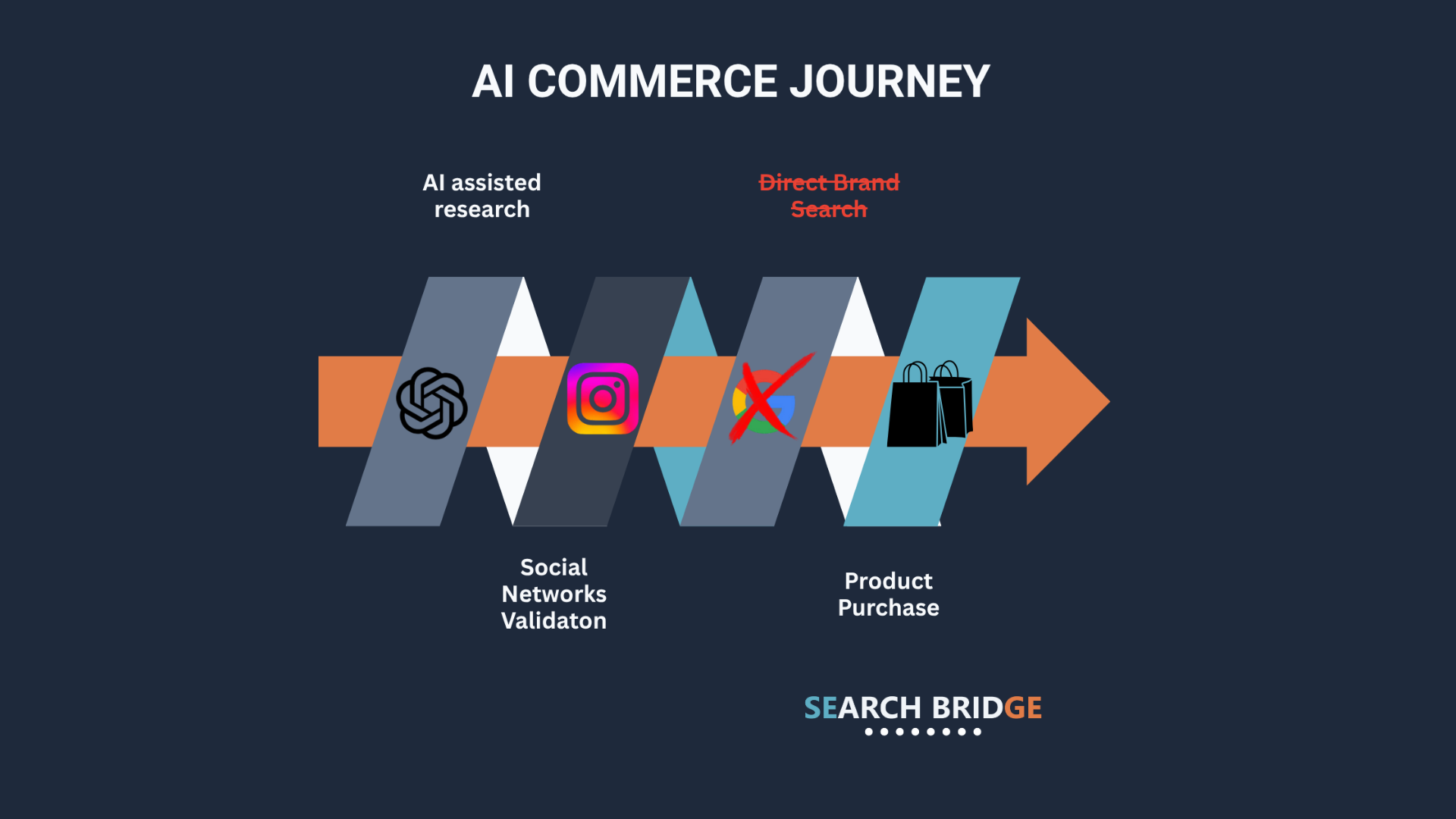
Un cliente chiede a ChatGPT un marchio italiano di pelletteria sostenibile. Il tuo concorrente è consigliato e la decisione di acquisto avviene istantaneamente, senza che il cliente visiti mai il tuo sito web. Questo scenario si verifica già migliaia di volte al giorno. Man mano che le scoperte basate sull'intelligenza artificiale crescono rapidamente, i marchi devono ripensare al funzionamento della visibilità in un mondo in cui i consigli sono generati dall'intelligenza artificiale anziché dalle classifiche di ricerca. Questo articolo spiega perché la SEO tradizionale non è più sufficiente e cosa devono fare i brand ora per assicurarsi di rimanere visibili nella prossima era del commercio.
I consumatori prendono sempre più decisioni di acquisto direttamente all'interno delle conversazioni basate sull'intelligenza artificiale. Quando l'intelligenza artificiale consiglia i concorrenti anziché il tuo marchio, la vendita viene persa prima che il tuo sito web venga visitato e le analisi tradizionali non lo mostrano mai. Questo articolo spiega perché il successo della SEO non garantisce più la visibilità nella ricerca basata sull'intelligenza artificiale e come i brand devono sviluppare nuove funzionalità per competere nella scoperta basata sull'intelligenza artificiale.
Il traffico dalle piattaforme di intelligenza artificiale ai siti Web di vendita al dettaglio è aumentato notevolmente, mentre il traffico di ricerca tradizionale sta diminuendo poiché più query terminano senza clic. I motori di intelligenza artificiale come ChatGPT e Gemini generano consigli basati su modelli appresi dai contenuti sul Web anziché sulle classifiche di ricerca. Questo cambiamento richiede ai brand di ripensare le strategie di visibilità, concentrandosi sui contenuti strutturati, sull'autorità dell'ecosistema e sui segnali leggibili dall'intelligenza artificiale. L'articolo delinea i cambiamenti strutturali necessari ai marchi per competere nella scoperta basata sull'intelligenza artificiale e in che modo piattaforme come Search Bridge aiutano a misurare e migliorare la visibilità dell'IA.
La scoperta dell'IA sta rapidamente sostituendo la ricerca tradizionale e molti marchi stanno già perdendo vendite senza accorgersene. Sempre più spesso i consumatori prendono decisioni di acquisto direttamente all'interno di conversazioni basate sull'intelligenza artificiale, in cui i brand vengono consigliati in base a come l'intelligenza artificiale li interpreta, non al loro posizionamento su Google. Questo articolo esplora il crescente passaggio dai clic alla scoperta mediata dall'intelligenza artificiale, il motivo per cui i segnali SEO tradizionali non si traducono in piattaforme di intelligenza artificiale e come i marchi devono sviluppare nuove funzionalità per garantire che siano visibili quando l'IA consiglia i prodotti.
Man mano che l'intelligenza artificiale diventa un'interfaccia di scoperta primaria per i consumatori, i marchi devono affrontare una nuova sfida: capire come le piattaforme di intelligenza artificiale li percepiscono e li consigliano. Gli strumenti di analisi e SEO tradizionali non possono tenere traccia di queste conversazioni basate sull'intelligenza artificiale o spiegare perché i concorrenti compaiono invece nei consigli. Intelligence Beam di Search Bridge monitora centinaia di query di intelligenza artificiale su piattaforme come ChatGPT, Claude e Gemini per rivelare come vengono descritti i marchi, dove esistono lacune di visibilità e quali cambiamenti strutturali sono necessari per migliorare la rilevabilità dell'IA.
Today, a customer opened ChatGPT and typed:
"I want an Italian leather bag brand that prioritizes craftsmanship over logos, with transparent sustainability practices."
Your brand was not mentioned. Your competitor was. The chatbot described their atelier process, their material sourcing, and the heritage behind their designs. The customer made a purchase decision without ever visiting your website, reading a review, or searching on Google.
You will never see this in your analytics, yet it already determined the outcome of a sale that could have been yours.
This is not a prediction about the future; it is a snapshot of what is happening right now. Thousands of times each day, consumers are making choices through AI-powered discovery engines. By the time you read this in early November 2025, the visibility race for 2026 is already underway. The brands that begin building AI authority this quarter will dominate discovery for the next years to come.
There are eight weeks left in the year. What you do with them will decide whether your brand is visible or invisible in the new discovery layer shaping the next era of commerce.
The Traffic Data You Need to See
When Adobe analysed last year's holiday shopping season, they found something startling: traffic from AI platforms to retail sites increased 1,300% year-over-year. This holiday season, they're projecting another 520% increase.
This is what consumers are using AI for:
- 53% use it for product research
- 40% for recommendations
- 36% for finding deals
- 30% for gift inspiration
These are purchase decisions happening in AI conversations, not on your website.
The evidence is showing up in analytics dashboards across industries. HubSpot's marketing blog lost 80% of traffic on educational content once Google started showing AI-generated answers. Chegg saw a 50% drop as students moved to AI tools. Over 58% of Google searches now end without anyone clicking to a website.
The click-through pipeline that built digital marketing is breaking. Consumers get complete answers from AI and simply move on.
Why Your SEO Success Doesn't Transfer
The authority signals that got you to the top of Google - domain strength, backlinks, keyword optimisation, mean little to ChatGPT, Claude, or Gemini.
AI platforms don't rank websites. They synthesise answers from patterns they've learned across millions of sources. When someone asks for luxury brand recommendations, the AI isn't checking Google rankings in real-time. It's drawing on associations it formed during training and through the content it can easily access and understand.
Think of it this way: Traditional search is like a library catalog giving you a list of books. AI search is like asking a knowledgeable friend who's read everything and gives you a direct recommendation. Your ranking in the catalog doesn't matter if the friend doesn't remember you exist.
This creates three problems luxury brands face right now:
Your content isn't structured for AI extraction. Your beautiful storytelling and emotional brand narrative is difficult for AI to parse into clear, citable facts.
You're invisible where AI learns. If your brand isn't discussed in Wikipedia, industry publications, and authoritative forums like Reddit, AI platforms have limited context about who you are.
You can't measure what's happening. Traditional analytics show website traffic. They don't show the thousands of AI conversations where your competitor is mentioned and you're not.
What Walmart Sees (That You Should Too)
When Doug McMillon announced Walmart's OpenAI partnership in October, his statement revealed where the world's largest retailer sees commerce heading:
"For many years now, eCommerce shopping experiences have consisted of a search bar and a long list of item responses. That is about to change. There is a native AI experience coming that is multi-media, personalized and contextual. We are running towards that more enjoyable and convenient future with Sparky and through partnerships including this important step with OpenAI."
Read that again: "That is about to change."
Walmart is rebuilding their entire discovery infrastructure around it. If the interface of "search bar and list of results" is ending, every visibility strategy built on that interface needs to evolve.
The brands establishing AI visibility now are recognising that consumer behaviour has already shifted, and the measurement frameworks that guided SEO strategy for a decade don't capture what's happening in AI-mediated discovery.
It does mean competition against brands that already own the answers on AI platforms strengthen with each model update and each consumer interaction.
Why Luxury Brands Face a Unique Challenge
For luxury specifically, this transition exposes a fundamental tension: the qualities that define premium brands - heritage, craftsmanship, emotional resonance, intangible value - are precisely the hardest to communicate through the structured, factual formats that AI platforms prefer.
When a consumer asks ChatGPT "What makes a luxury bag worth the investment?", the AI needs to draw on clear, authoritative content that explains value in ways it can synthesise and attribute. If your content is purely aspirational storytelling without structured substance, AI platforms struggle to cite you as the authority.
This is the insight that led to Search Bridge's creation. Existing SEO tools could track keyword rankings and website traffic, but they couldn't answer the questions these brands actually needed answered.
Questions like:
- Does ChatGPT understand our heritage story, or does it confuse us with competitors?
- When consumers ask about sustainable luxury, why does AI mention these three brands but not us?
- What specific content gaps are preventing AI platforms from positioning us as category leaders?
Giulio Salvucci, Founder of : "The moment came during a meeting with a luxury bag manufacturer in Milan. Their CMO showed me their SEO dashboard and they were position 3 for 'Italian leather bags.' Traffic was strong. But then she asked: 'When someone asks ChatGPT about heritage craftsmanship in luxury bags, does it mention our 60 years of family tradition, or does it just cite Hermès?'
I pulled up ChatGPT on the spot. We asked five variations of that question. Their brand appeared zero times. Not once. Meanwhile, their analytics dashboard showed 'excellent visibility.'
That's when I realised that traditional SEO tools measure where you rank in searches people aren't making anymore. They can't tell you if AI understands your heritage story, recognises your craftsmanship authority, or even knows you exist when it matters. Intelligence Beam was born from that gap, the need to ask AI specific questions about your brand, not generic queries where you're already invisible."
Search Bridge Intelligence Beam was built specifically to answer these questions with precise visibility into how AI platforms understand luxury value, competitive positioning, and brand authority.
What AI Visibility Actually Requires (And Why Most Teams Can't Build It)
The brands succeeding in AI search aren't just "creating better content." They're building five interconnected capabilities:
- Content structured for AI extraction – Comparison tables, clear FAQ formats, schema markup, and information organized in discrete chunks AI can cite. Not replacing brand storytelling but adding technical structure to key content.
- Ecosystem presence beyond your website – Strategic visibility in Wikipedia, industry publications, expert commentary, and authoritative sources where AI learns about your category.
- Technical foundations for discoverability – Schema.org markup, clean HTML structure, and accessibility for AI crawlers. Many luxury websites create technical barriers that make content difficult for AI to discover and interpret.
- Demonstrable expertise – Named experts, original research, and consistent positioning across credible sources that AI platforms recognise as authoritative.
- Measurement infrastructure – Tracking how multiple AI platforms describe your brand, monitoring citation frequency, measuring competitive positioning, capabilities that don't exist in standard analytics tools.
The challenge is that it requires expertise most teams don't have, takes a long time to develop systematically, and competes with everything else on your roadmap.
Most critically: without systematic measurement, you're optimising blind.
How Search Bridge Helps Luxury Brands
Search Bridge's Intelligence Beam monitors 500+ category-relevant queries across ChatGPT, Claude, Gemini, Perplexity, and Google's AI Overview weekly. You see exactly how each platform describes your brand, which queries generate competitor mentions but not yours, and how your positioning compares to competitive sets.
But visibility without strategy is just data.
Intelligence Beam identifies the specific structural reasons why AI platforms cite competitors but not you, then provides the frameworks to address them:
- Technical templates for schema implementation that works with your CMS and preserves brand aesthetic.
- Content restructuring guidance that adds AI-friendly structure without compromising your brand voice.
- Citation-building strategies for establishing ecosystem presence in publications and platforms that shape AI understanding.
- Continuous optimisation as AI platforms evolve, showing you what's working and where to focus effort.
The brands working with Search Bridge treat this as infrastructure investment; building capabilities they'll need as AI-mediated discovery becomes increasingly dominant over 2-3 years.
Questions Luxury Brand Leaders Are Asking
"How urgent is this?"
Consumer behaviour has already shifted measurably. The question isn't whether to respond, but whether to build capabilities systematically now or play catch-up later. Early movers build momentum that compounds because AI platform associations and consumer awareness patterns strengthen over time.
"Can our existing team handle this?"
Possibly, but it requires capabilities most SEO teams don't currently have: AI platform monitoring, structured data at scale, ecosystem presence building, and measurement frameworks that standard tools don't provide. The teams executing this successfully either make significant internal infrastructure investments or partner with specialists who've built these capabilities.
"How do we measure ROI?"
AI Visibility and Its Value
AI visibility creates value through different mechanisms than traditional SEO: branded search lift as consumers discover you through AI then search directly, higher-quality referrals (AI-referred traffic typically converts better), and competitive positioning advantages as AI becomes the primary discovery layer. Intelligence Beam measures these signals because standard analytics don't track them systematically.
Does this replace our SEO investment?
No. AI visibility builds strong content fundamentals. The question is whether you're adding the structural elements and measurements that make your existing authority discoverable and citable by AI platforms.
Start with Clarity, Not Assumptions
Most luxury brands don't know what AI platforms actually say about them. They assume their strong SEO performance transfers, that their brand story is being told accurately and that their competitive positioning is similar to what they see in traditional search.
These assumptions are testable.
Intelligence Beam shows you what would take weeks to manually check across platforms:
- How ChatGPT, Claude, Gemini, and Perplexity currently describe your brand
- Which competitor brands appear for queries where you don't and why
- Specific content, technical, and authority gaps preventing AI citation
- Strategic framework for building systematic visibility that aligns with luxury positioning
It's time you have full clarity to make informed strategic decisions. See what AI platforms actually say about you, understand the structural reasons why, and determine how systematically you want to address the gaps.
The brands that establish AI visibility now are building advantages that compound as consumer behaviour continues shifting. Momentum in AI discovery - like momentum in traditional search before it - rewards early, systematic investment.
Sources: Search Engine Land (2025), Adobe Analytics Holiday Shopping Report (2024-2025), Backlinko AI Search Research, Semrush Traffic Analysis (2025), Walmart Inc. CEO Statement (October 2025)
Featured articles

Unisciti all'8% dei marchi più ricercati tramite AI.
Insegna all'intelligenza artificiale come vendere i tuoi prodotti, così gli LLM potranno consigliarli con sicurezza.
Domande frequenti
Voi avete domande, noi abbiamo le risposte.